Indoor bed bug eradication in Franklin County requires structured clinical intervention rather than broad-spectrum surface sprays. In neighborhoods with historic architecture like Victorian Village and German Village,…
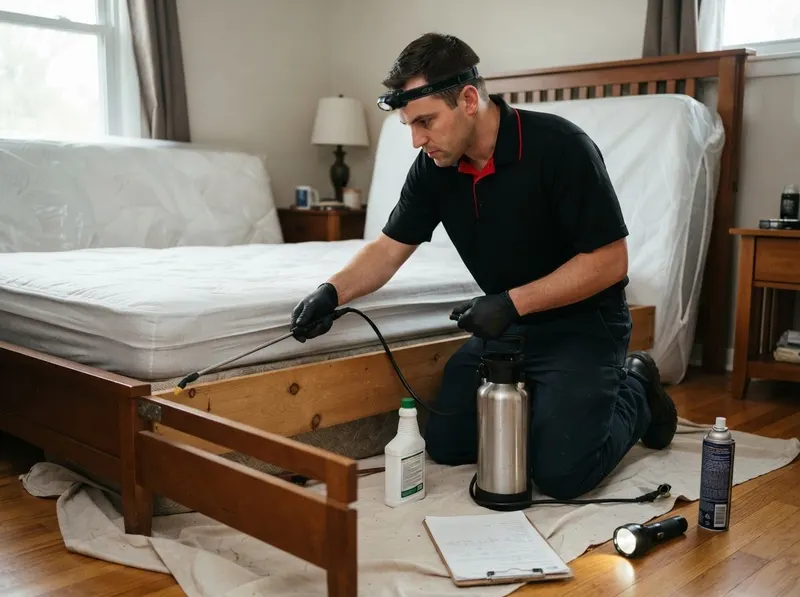
Indoor bed bug eradication in Franklin County requires structured clinical intervention rather than broad-spectrum surface sprays. In neighborhoods with historic architecture like Victorian Village and German Village, continuous lathe-and-plaster walls and original hardwood subflooring create expansive interconnected channels where populations retreat during daytime light hours. The protocol begins with meticulous mechanical isolation: technicians remove switch plate covers, unfasten baseboard perimeters, and employ specialized high-efficiency particulate air containment via standards outlined by the U.S. Environmental Protection Agency. According to biological research compiled by the Ohio State University Department of Entomology, local populations show documented resistance to synthetic pyrethroids, requiring mechanical eradication techniques such as controlled forced heat exceeding 122 degrees Fahrenheit alongside pharmaceutical-grade amorphous silica dust applications registered under the National Pesticide Information Center guidelines.
Selecting the correct remediation method depends entirely on room architecture, occupant health considerations, and structural density. Whole-structure thermal treatment is indicated when multi-room contamination spans continuous drywall in newer single-family properties throughout Upper Arlington, Bexley, or Worthington Hills. Conversely, targeted chemical-free cryogenic or steam intervention combined with precision desiccant barrier injection fits single-room occurrences in multi-unit properties across the Short North Arts District and Franklinton. The primary mechanical trade-off centers on preparation footprint versus turnaround duration: thermal convection elevates ambient temperatures within 6 to 8 hours to penetrate deep structural framing, requiring sensitive electronics and thermal-reactive belongings to be safeguarded, whereas precision desiccant applications allow continuous residential occupancy but require a 14-day incubation cycle to capture freshly hatched instars as guided by the Centers for Disease Control and Prevention.
Long-term infrastructure defense requires addressing building access vectors and moisture dynamics. In older brick masonry dwellings throughout Olde Towne East and Clintonville, perimeter baseboard shrinkage often reveals open sub-sill gaps directly into crawlspaces. Technicians seal these entry lines using expandable acrylic elastomeric sealants compatible with specifications from the ASTM International building standards. To maintain domestic safety, products adhere strictly to criteria managed by the Ohio Department of Agriculture, avoiding persistent neurotoxic vapors inside enclosed bedrooms where pets and infants sleep. Technicians provide certified mattress encasements tested to entomological bite-proof standards and calibrate application equipment following baseline technical criteria established by the National Pest Management Association. Structural verification ensures complete life-cycle eradication without locking properties into recurring annual chemical contracts.
Every job gets a firm, written price after a free on-site visit.
Tell us about your indoor bed bug elimination job in Columbus and we'll send a clear, written quote, usually the same day.
 WillowForge Pest Care